
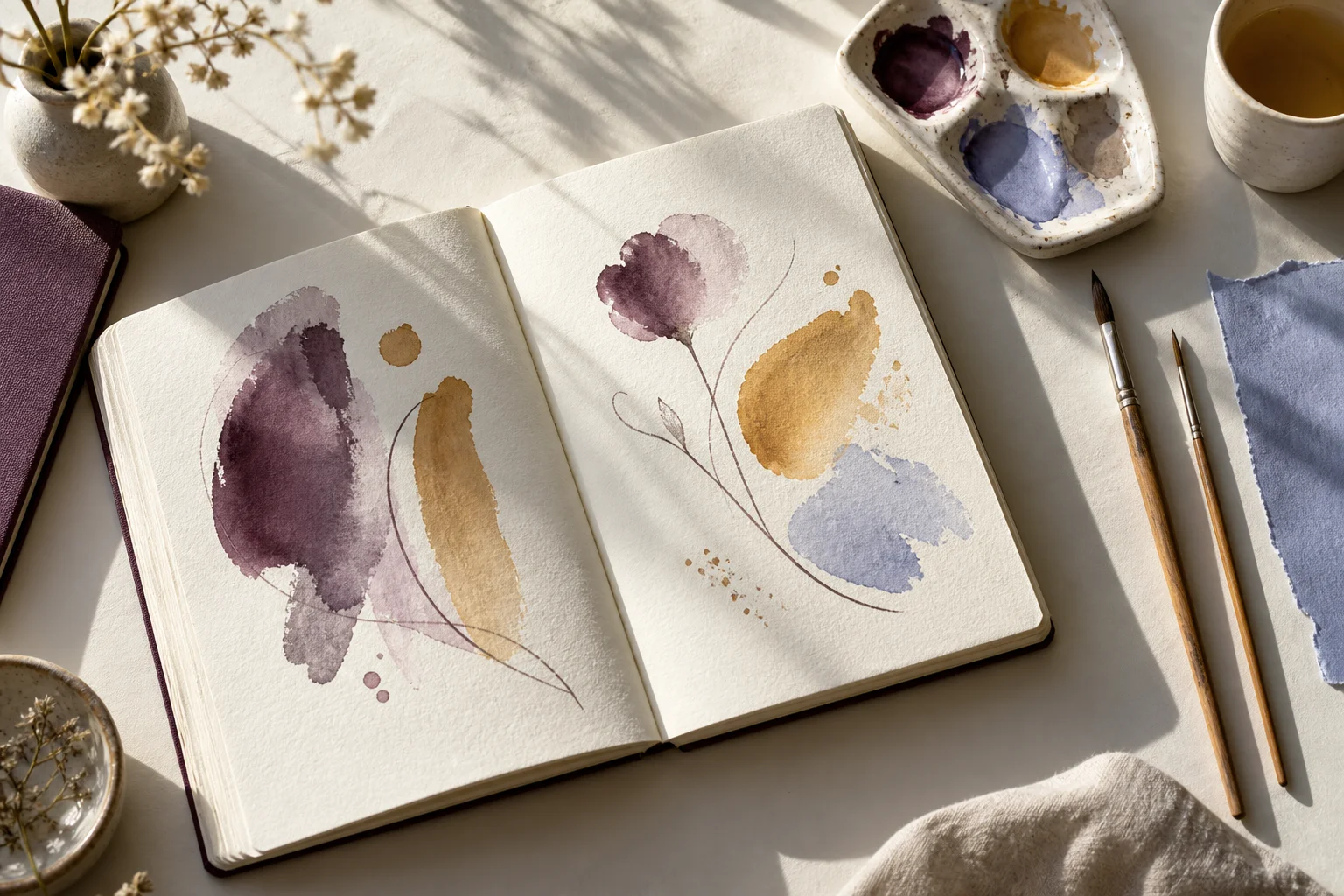
A place to begin
Choose a project that fits the space and time you already have. Make the first session about beginning, rather than finishing.
There is a particular kind of delay that happens before starting something creative: first, you need a better desk. Then the right notebook. Then an afternoon with nothing else in it.
Try making the invitation smaller. A corner of the kitchen table can be enough for a pencil sketch. A notebook and a pen can be enough for a page of observations. Your first project can be something you put away after twenty minutes.
Choose the kind of making you miss
Instead of asking which hobby you should be good at, think about what you would like to spend time doing. Do you want to make marks, collect ideas, tell a story, or arrange colors?
- Making marks: draw three everyday objects with a pencil you already own.
- Collecting ideas: start a notebook page of colors, words, and shapes you notice during the week.
- Telling stories: write a tiny scene set somewhere familiar.
- Arranging colors: make a paper collage from packaging or paper scraps you are happy to cut up.
None of these needs to become your permanent hobby. Choose the one you are curious enough to try today.
Give it a small, definite space
Clear enough room for the activity, rather than reorganizing the whole house. Put your materials on a tray or in one box so the session has an easy beginning and end.
For a dry activity such as drawing or writing, a notebook and a pencil may be all you need. For anything wet or messy, protect the surface and check that the materials suit the space. Keep drinks separate from art water and follow the instructions on your supplies.
Leave expensive upgrades until you know what you enjoy. An unused collection of materials is not a requirement for a creative life.
Make the first project deliberately small
A whole illustrated journal is a large commitment. One page about your morning is something you can begin. A perfect landscape asks a lot of a first attempt. A few observations about the view from your window asks much less.
Write a simple session plan: “Today I will draw my mug for ten minutes.” If you want to continue, you can. If you stop there, you have still done the thing you planned.
Leave a note for next time
Before packing away, write one sentence about what you want to try next. It could be “draw the handle from a different angle” or “try a page with only two colors.” Put it with the materials.
The aim is a clear place to pick up, rather than a judgment about whether the session was good. Keep the work, date it if you like, and let a collection of small attempts accumulate.
A starting point for watercolor
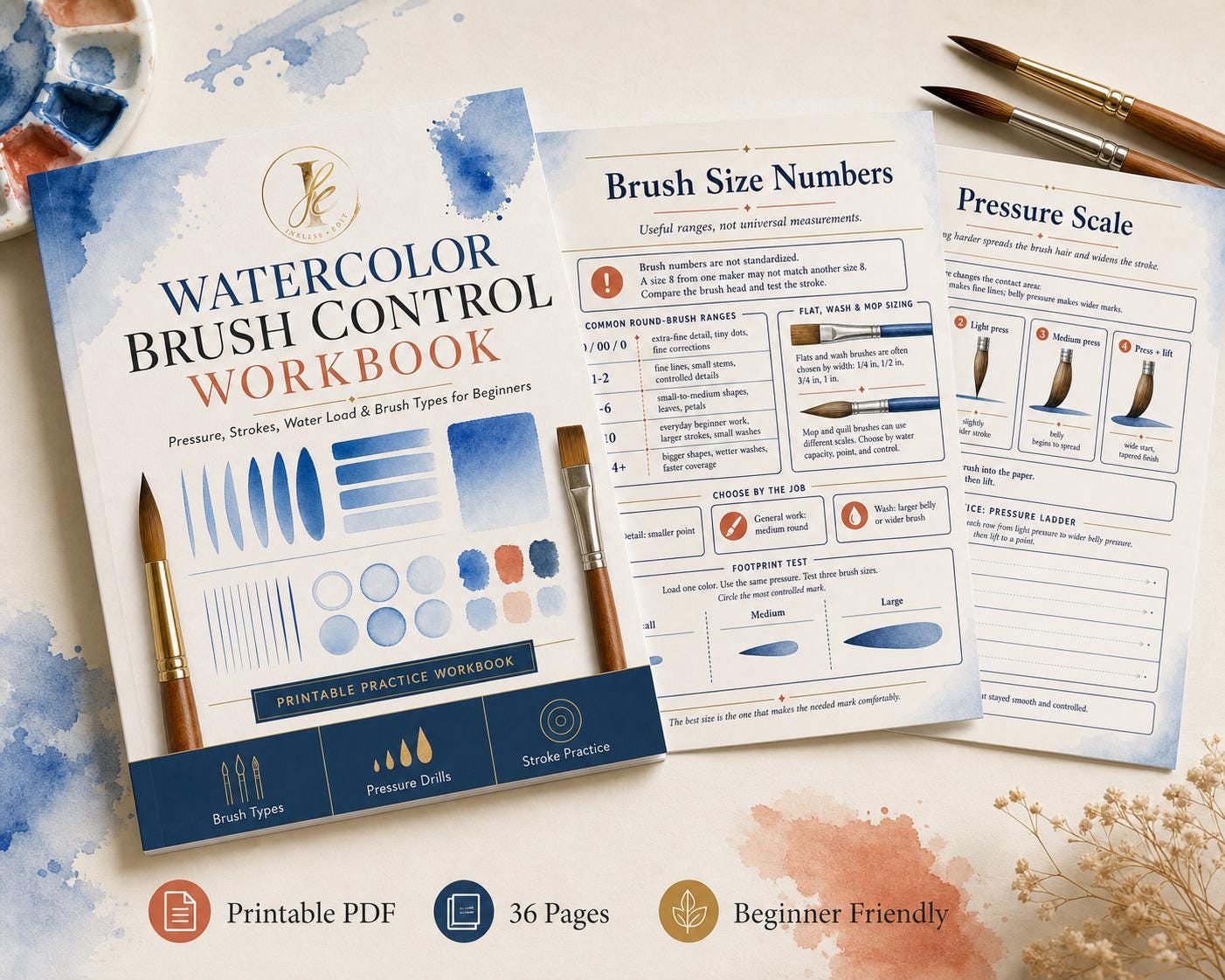
From the InklessEdit print shop
Watercolor Brush Control
If watercolor is the hobby you want to explore, this printable workbook gives you guided brush-control practice to work through at your own pace.
36 pages · Printable PDF
View on EtsyDigital download · No physical item shippedPrefer a little structure?
For a quieter starting point, try five notebook prompts for an unhurried afternoon.
Choose by the session, not the finished result
A photograph of a finished project tells you very little about whether you will enjoy making it. Imagine the middle of the activity instead. Would you like repeatedly adjusting a drawn line, arranging scraps until they feel right, or trying different words for the same thought?
Give yourself three small trial sessions rather than a permanent identity. One day, draw an object. Another day, write a scene. On a third, arrange a few colors on paper. Afterwards, ask which activity you would willingly return to when nobody is watching.
You do not need to turn the comparison into a scorecard. A sentence such as “I liked choosing colors, but not cutting tiny pieces” is enough to guide the next idea.
Make room for different kinds of days
Prepare two versions of your idea: a short version and an open-ended version. For a notebook page, the short version might be three observations. The longer version might add a sketch and a paragraph. Both belong to the same hobby.
This is an optional planning device, not a rule about discipline or wellbeing. If it makes the activity feel like another job, set it aside.
If watercolor is your first choice, read what the medium involves before assembling a kit. If you want to avoid wet materials for now, our small creative kit uses ordinary dry supplies.
Words and ideas from InklessEdit. Read our editorial approach.
← Back to the journal