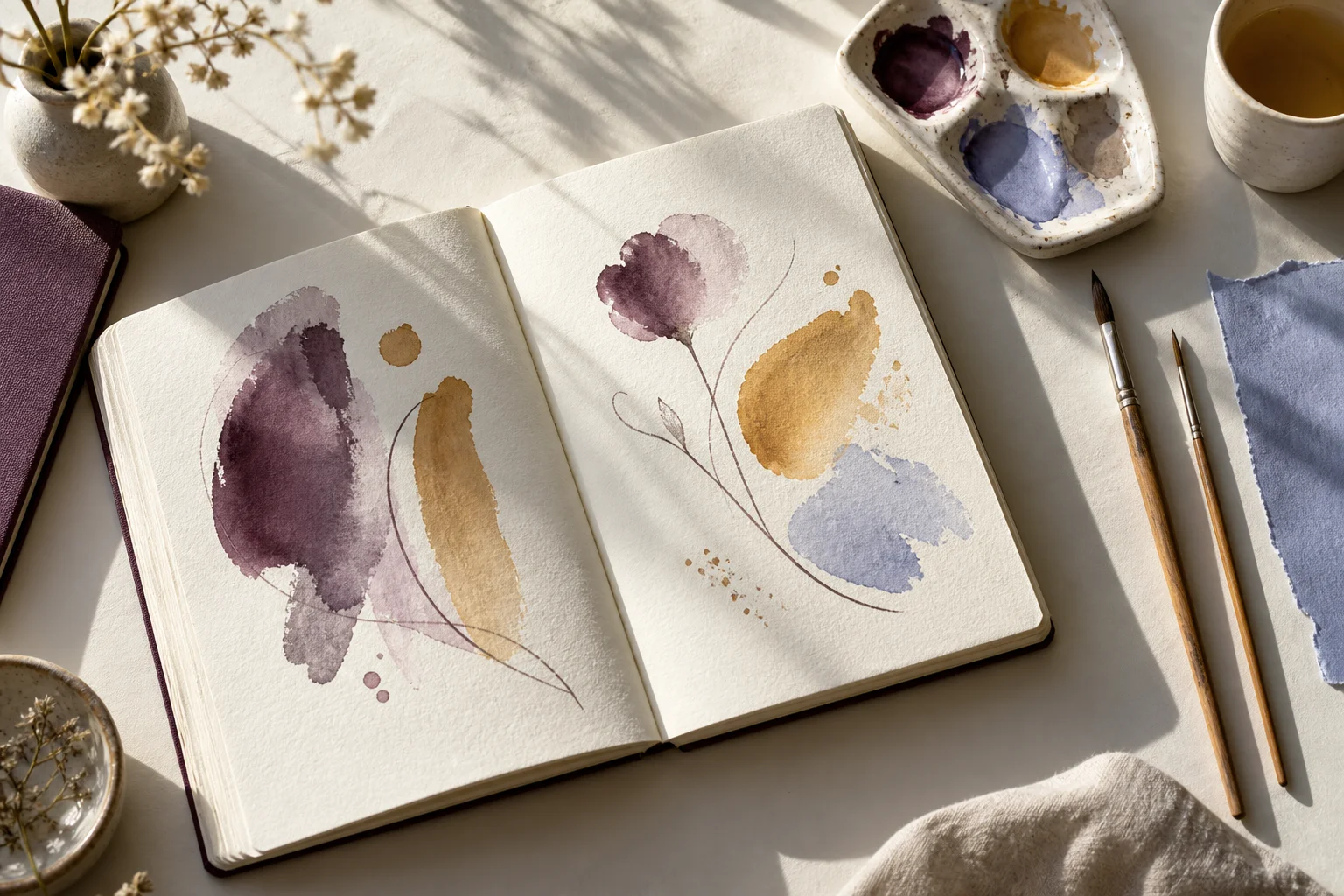
A place to begin
Start with watercolor paper, a small paint selection, and one suitable brush. Choose a subject you want to explore before buying a larger kit.
Watercolor is paint that you work with water, usually on paper. Its appeal is the range between a barely visible wash and a rich, concentrated mark. You can enjoy that range in a small sketchbook, a botanical study, an abstract page, or a finished landscape.
If you are deciding whether to try it, the useful question is not whether watercolor is “easy.” It is whether you like the process: noticing how a mark changes, allowing a layer to dry, and deciding what to leave alone. This guide explains the medium and offers a practical way to choose your first materials.
What watercolor paint is made of
Watercolor commonly combines pigment with a binder such as gum arabic. Water makes the paint workable; the binder helps hold the pigment on the surface after drying. The V&A explains this relationship between pigment, binder, and support.
That means a pan of dried color is not necessarily finished or unusable. Water is part of how you prepare it for painting. If your mental picture of paint is a liquid that comes straight from a bottle, watercolor can feel like a different kind of material.
The label “watercolor” also does not tell you everything about an individual color. Look at the maker’s information for the actual paint you are buying, rather than assuming every blue or every red behaves identically.
Why watercolor looks luminous
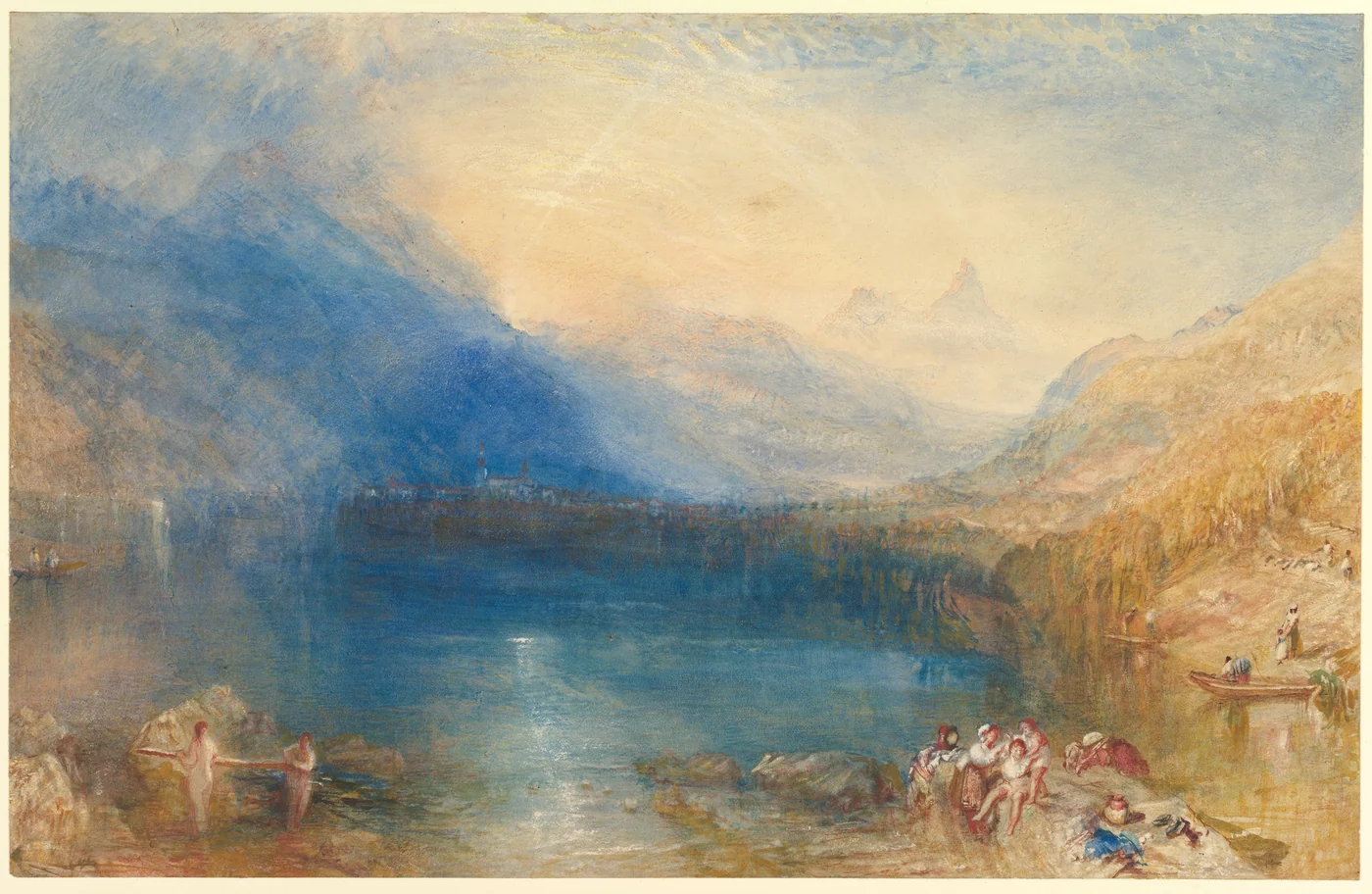
White paper can contribute to the brightness of transparent watercolor. The Met also describes how damp surfaces encourage softer passages while painting on dry paper can produce more defined marks. These are material differences, not rules that every picture must follow. The Met: Watercolor.
When you look at a painting, try asking two questions: where is an edge very clear, and where does one shape disappear into another? A work can contain both. You do not have to choose between a completely loose style and a completely detailed one.
For examples, visit our five watercolor paintings to look at closely. The pictures are a useful reminder that watercolor is more varied than one fashionable style.
A small first kit
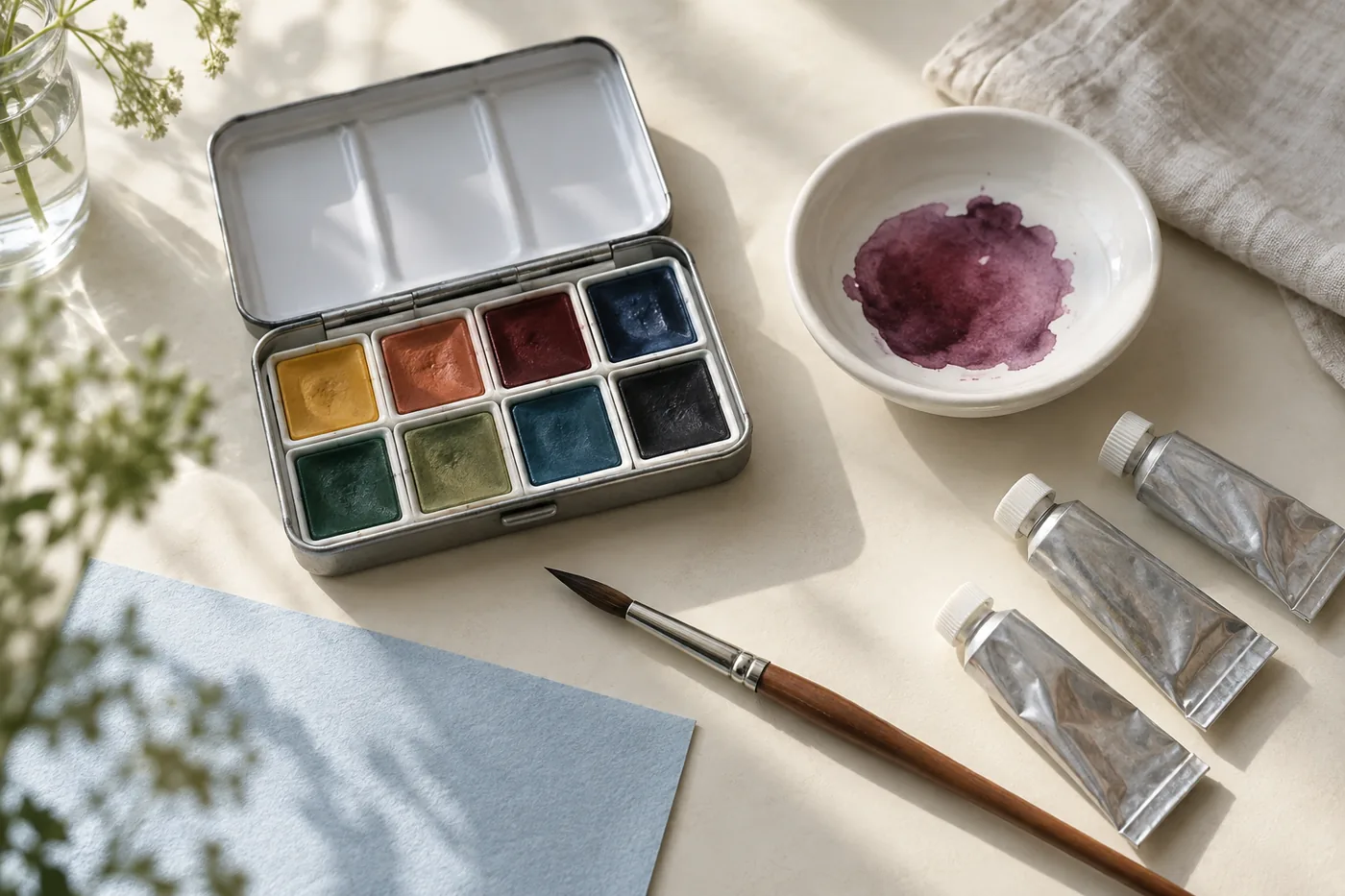
Our suggested starting point is a pad sold for watercolor, a modest watercolor paint set, one round brush made for watercolor, a mixing surface, a stable water container, and an absorbent cloth. A pencil is optional if you like planning an outline.
Choose a paper size that fits your table. Check whether a set includes a usable mixing area before buying a separate palette. If a course gives a specific materials list, follow that list instead of combining several unrelated recommendations.
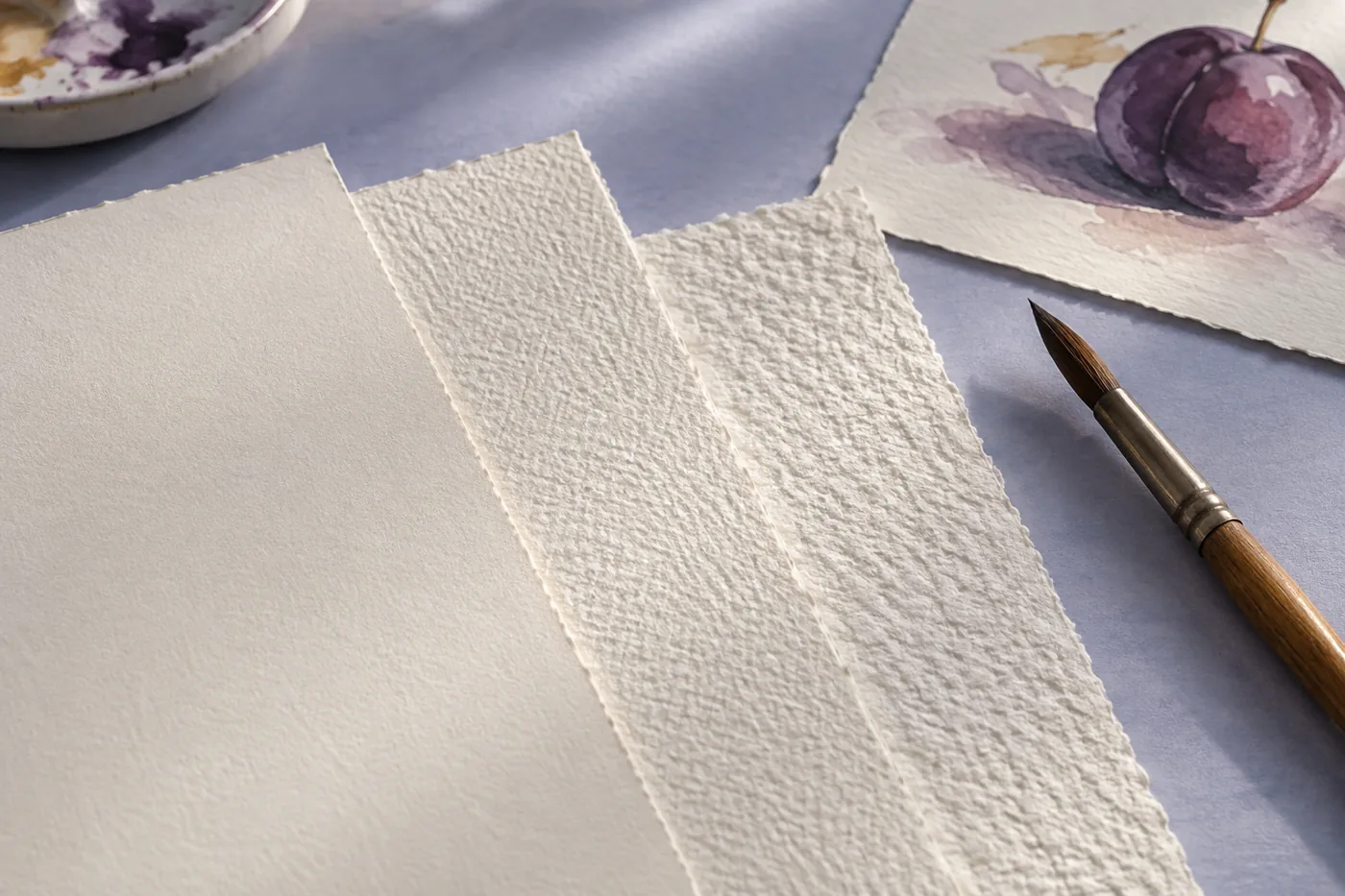
Put the paper decision ahead of decorative extras. Read our watercolor paper guide for the differences between surfaces, weight, and formats. There is no need to buy every option discussed there.
Choose the subject before the shopping list
Imagine the first page you would like to make. Perhaps it is a row of colored marks, the outline of a familiar mug, or a record of the colors outside your window. Write that down before browsing supplies.
Now divide your list into “needed for this page” and “interesting for later.” Keep the second list. It gives your curiosity somewhere to go without turning it into an immediate purchase.
A first page does not need to become a framed picture. You might discover that you prefer keeping small studies, making cards, or following structured practice. Those are different uses of the same medium, and each can shape what you choose next.
If you want guided brush practice
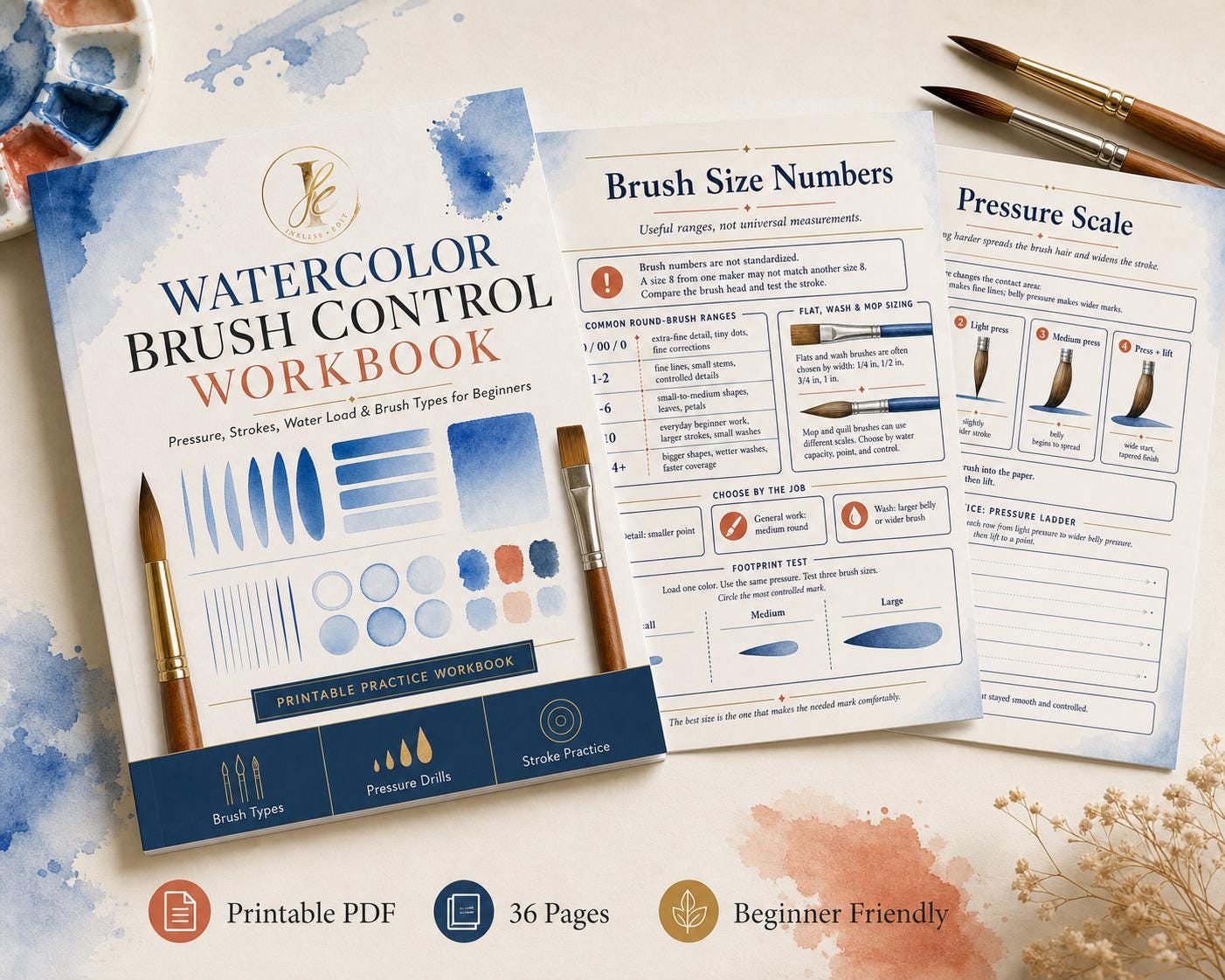
From the InklessEdit print shop
Watercolor Brush Control
InklessEdit’s printable Watercolor Brush Control workbook is a relevant next step if you prefer a sequence of practice pages to choosing a subject from scratch. It is a digital download; physical supplies are separate.
36 pages · Printable PDF
View on EtsyDigital download · No physical item shippedQuestions before you begin
Do I need tubes or pans?
Either format can be a reasonable starting point. Choose for the way you want to set up and store your materials. Our pans versus tubes comparison explains the tradeoffs.
Is watercolor the same as gouache?
They are related, but do not always give the same kind of surface. Read watercolor versus gouache before buying a set simply because its box looks similar.
Do I need to be good at drawing first?
You can choose an activity that does not depend on complex drawing: color notes, simple shapes, or brush practice. If your goal is a detailed portrait, drawing becomes a separate skill worth studying. Match the first project to what you want to learn now.
Words and ideas from InklessEdit. Read our editorial approach.
← Back to the journal