A place to begin
For a first purchase, compare a small 300 gsm cold-pressed pad with your budget and intended project. Weight, texture, and fiber are separate decisions.
The paper shelf can be more confusing than the paint shelf. “Cold pressed,” “300 gsm,” “cotton,” and “block” describe different things, so one impressive label does not answer every question.
The easiest way to choose is to start with the page you want to make. This guide separates the decisions, gives you a shortlist to investigate, and explains how to compare value. Our recommendations are based on published specifications and intended use, not a hands-on test or a promise that one paper will suit everybody.
First choose a surface
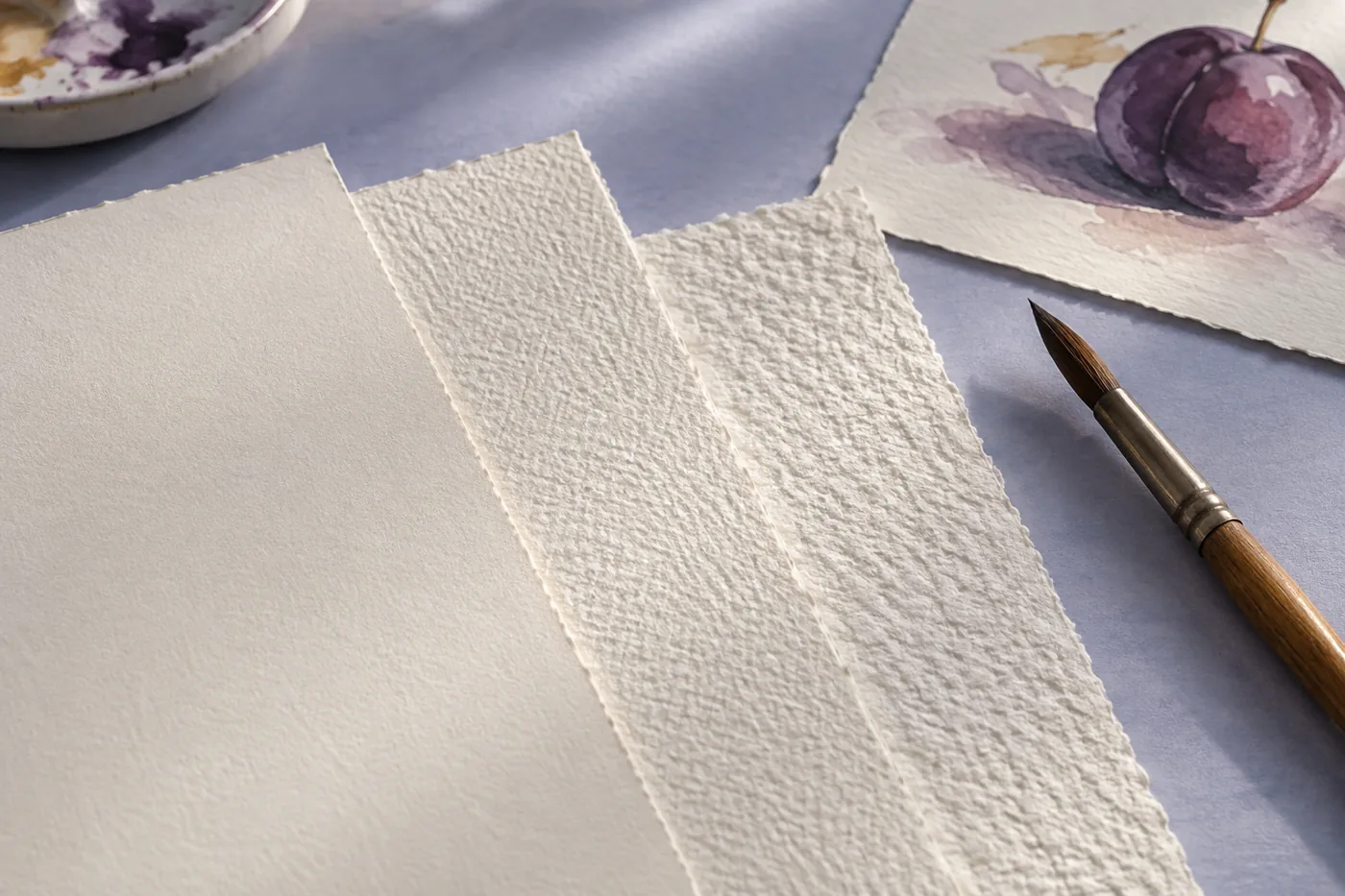
Hot-pressed watercolor paper has a smoother surface. Cold-pressed paper has more texture, while rough paper offers a more pronounced surface. Winsor & Newton associates smoother paper with detailed work and textured surfaces with effects such as granulation. Read its paper guide.
For an undecided beginner, we suggest considering cold press first. It gives you a clear starting choice without committing to the smoothest or roughest option. If you mainly want precise ink lines with small areas of color, include a hot-pressed sample in your comparison.
Do not buy three large pads just to learn the vocabulary. A small pad or sample selection is a more contained experiment. Keep a note of the exact paper you used so that a pleasing result can be repeated.
Weight is not the same thing as texture
Paper weight and surface finish are separate specifications. For example, ARCHES lists several weights and three textures within its Aquarelle range. Canson lists XL Watercolour as cold pressed and 300 gsm. ARCHES specifications, Canson specifications.
This is why “I bought 300 gsm” is not a complete description. Note the maker, range, surface, weight, and format together.
Our practical starting suggestion is a small 300 gsm pad, but the number is not a guarantee against every ripple or handling problem. Consider how much water you plan to use and follow the manufacturer’s instructions for supporting the sheet.
Read the fiber and sizing information
ARCHES Aquarelle is specified as 100% cotton and uses gelatin sizing. Those are useful facts when comparing it with another range; they are also relevant if you wish to avoid animal-derived sizing. Check the exact product rather than assuming all watercolor papers share the same formulation. ARCHES product information.
A label is the start of a comparison, not an instruction to buy the most expensive option. Decide whether you are making quick exploratory pages, working through repeated practice, or preparing a picture you want to keep.
If your current paper does something frustrating, describe the problem before upgrading: is the sheet too small, the surface too smooth, or the format awkward? A specific problem produces a better shopping decision than “I need professional supplies.”
Pad, block, book, or loose sheet?
Think about what happens before and after painting.
- Pad: consider it when you want separate pages without choosing a large loose sheet.
- Block: check how the edges are glued and how the maker tells you to remove a finished sheet.
- Book: consider whether keeping a sequence together matters more than removing individual pages.
- Loose sheets: compare the usable size and whether you are comfortable cutting them to fit your projects.
ARCHES offers pads, blocks, rolls, and sheets; Canson XL includes pad and book formats. Availability varies by region and seller. Read the pack description carefully so that “20 pages” or “20 sheets” does not become a surprise.
Two ranges worth comparing
Canson XL Watercolour: a candidate for someone seeking a student-oriented 300 gsm cold-pressed option. Verify the sheet count and size on the particular pack. The maker’s positioning is not a substitute for deciding whether its surface suits your own work.
ARCHES Aquarelle: a candidate when you specifically want a 100% cotton paper and a choice of textures or weights. Its gelatin sizing is a relevant limitation for some buyers.
Neither is a universal winner. Compare the cost per usable sheet at the same size, then consider what you would actually use. We have not checked live Amazon prices or ranked these products by personal testing.
Pair paper with a clear practice plan
From the InklessEdit print shop
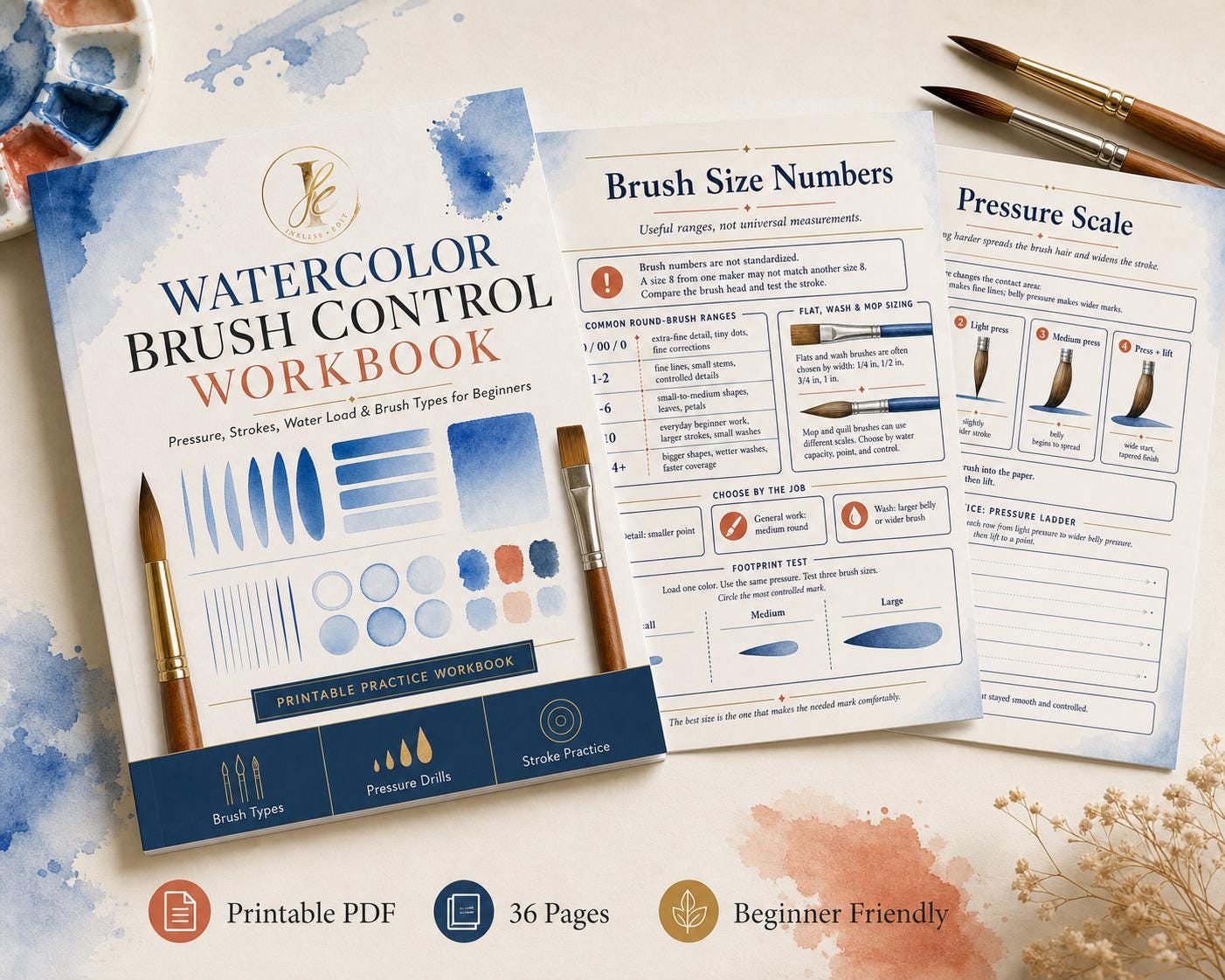
Watercolor Brush Control
If you want to use your paper for a structured practice routine, our brush-control workbook supplies printable guidance. Keep the workbook as a reference beside suitable watercolor paper; only feed paper through a printer if the printer supports that stock.
36 pages · Printable PDF
View on EtsyDigital download · No physical item shippedBefore you buy
Write down the five specifications you want: size, surface, weight, fiber preference, and format. Then check that the listing matches all five. A similar cover photograph is not enough.
If you already own watercolor paper, use it for a few small pages before replacing it. Record what you like and what you would change. That turns the next purchase into a response to your work.
For the paint decision that comes next, read watercolor pans versus tubes. To understand why the support matters at all, start with what watercolor is.
Words and ideas from InklessEdit. Read our editorial approach.
← Back to the journal