A place to begin
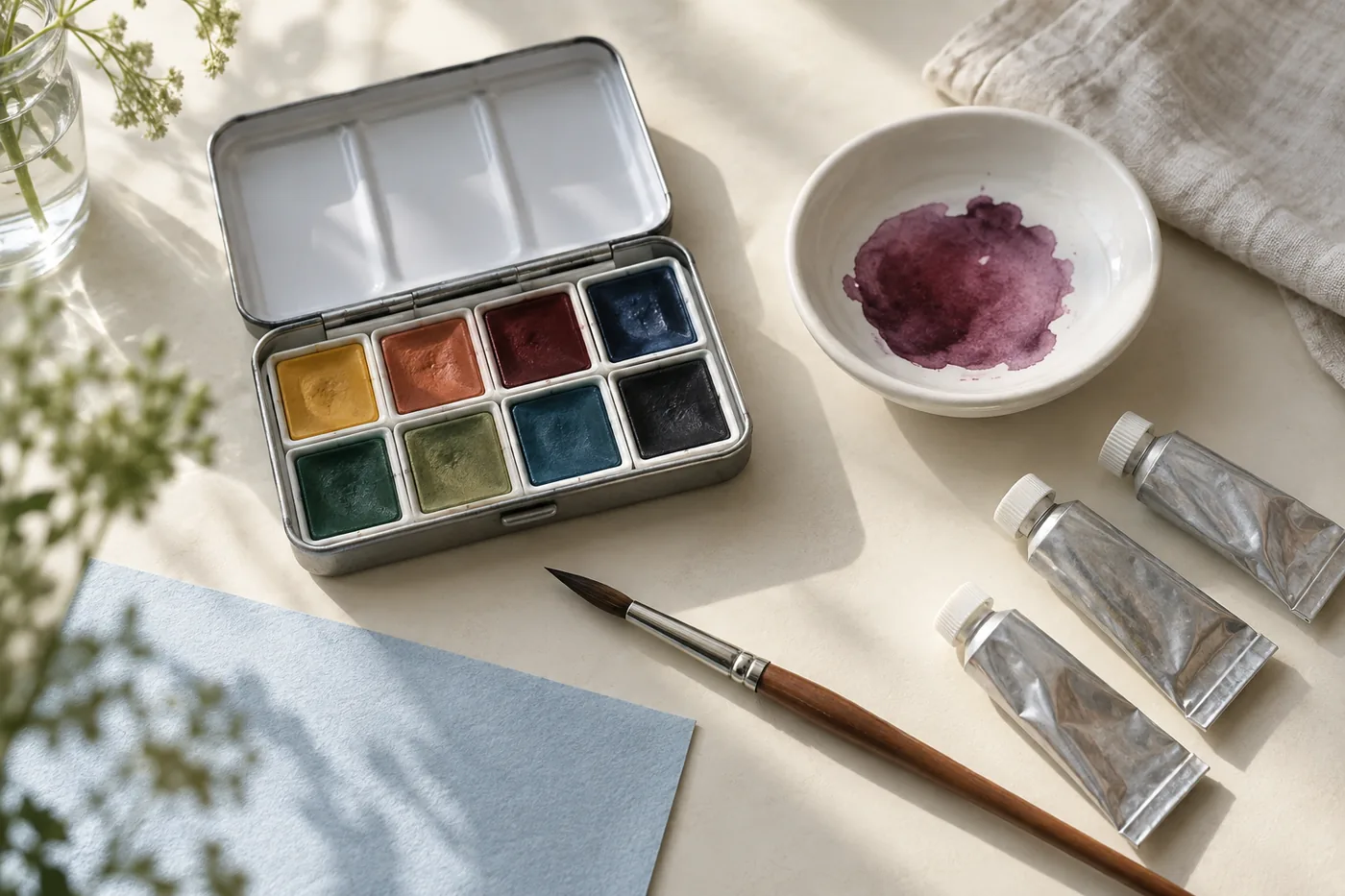
Choose the format that fits your setup. A compact pan set suits a contained kit; tubes let you choose how much paint to put on a separate palette.
A row of little pans and a handful of tubes can both lead to watercolor paintings. The buying decision is easier when you stop treating the packages as a ranking of seriousness.
This comparison is for someone choosing a first set or rethinking an awkward kit. It uses manufacturer information and practical setup questions. It is not a laboratory comparison of pigment strength, and we have not personally tested the named ranges for this article.
What changes when the package changes?
The Met describes watercolor as available in pans of color or tubes of thickened paint. The format tells you how the paint is supplied; it does not, by itself, establish how every pigment or brand performs. The Met: Watercolor.
With a pan, you bring water to the color. With a tube, you dispense paint onto a working surface. Imagine doing each at the place where you actually paint: a kitchen table, a class desk, or a small outdoor setup.
That simple thought experiment often reveals a preference sooner than a long product list. The rest of your kit must work with the format you choose.
When a pan set makes sense
A compact pan set is worth considering if you want your colors together in one box. Check the mixing area, how the box closes, and whether replacement pans are available. A tiny travel box may be convenient to carry yet feel cramped on a permanent desk.
DANIEL SMITH describes its half-pan sets as portable and offers individual half-pan colors. That is a useful example of a refillable system to investigate, rather than a reason everyone should buy the same set. Manufacturer’s half-pan range.
Before ordering, compare the actual color list. A large number on the lid does not tell you how many colors you will use in your first projects. If a class requires certain paints, make sure the set covers that list.
When tubes make sense
Tubes are worth considering if you want to dispense paint into a mixing area and choose individual colors separately. Budget for the palette or mixing surface as part of the setup, rather than comparing only the price of the paint.
DANIEL SMITH offers tube sets as well as pans, while Winsor & Newton’s watercolor ranges also include different formats. Read the specific set description because sizes and contents differ. DANIEL SMITH tube sets, Winsor & Newton watercolor ranges.
Ask yourself how you will label colors, keep caps organized, and store the palette. Those ordinary details can matter more to your everyday use than an impressive presentation box.
Make a fair shopping comparison
Compare like with like before deciding one format is better value.
- Compare the exact paint range, not a student set against a different professional range.
- Read the list of colors rather than counting pans or tubes alone.
- Include any palette, box, or brush you still need.
- Check whether you can replace a frequently used color individually.
- Decide how much storage and setup space the whole kit requires.
We do not give a fixed cost-per-painting estimate. That would depend on the work you make, how much paint you use, local prices, and the size of the product you buy.
If you are choosing a gift, ask which format the recipient already uses. Compatibility can be a better gift than a surprise change of system.
A restrained shortlist to investigate
Winsor & Newton Cotman: consider this range when comparing an accessible first watercolor set. Check the exact included colors, format, and brush rather than assuming every Cotman box is identical. Cotman range.
DANIEL SMITH half-pan or tube sets: consider these when you want to compare the same manufacturer’s options around portability, palette setup, and individual colors. Their existence in both formats is a useful reminder that pans are not inherently a beginner-only choice.
These are research candidates, not “best on Amazon” awards. Price, seller, availability, and product imagery will be checked separately if commercial recommendations are added.
Make a reference for the colors you choose
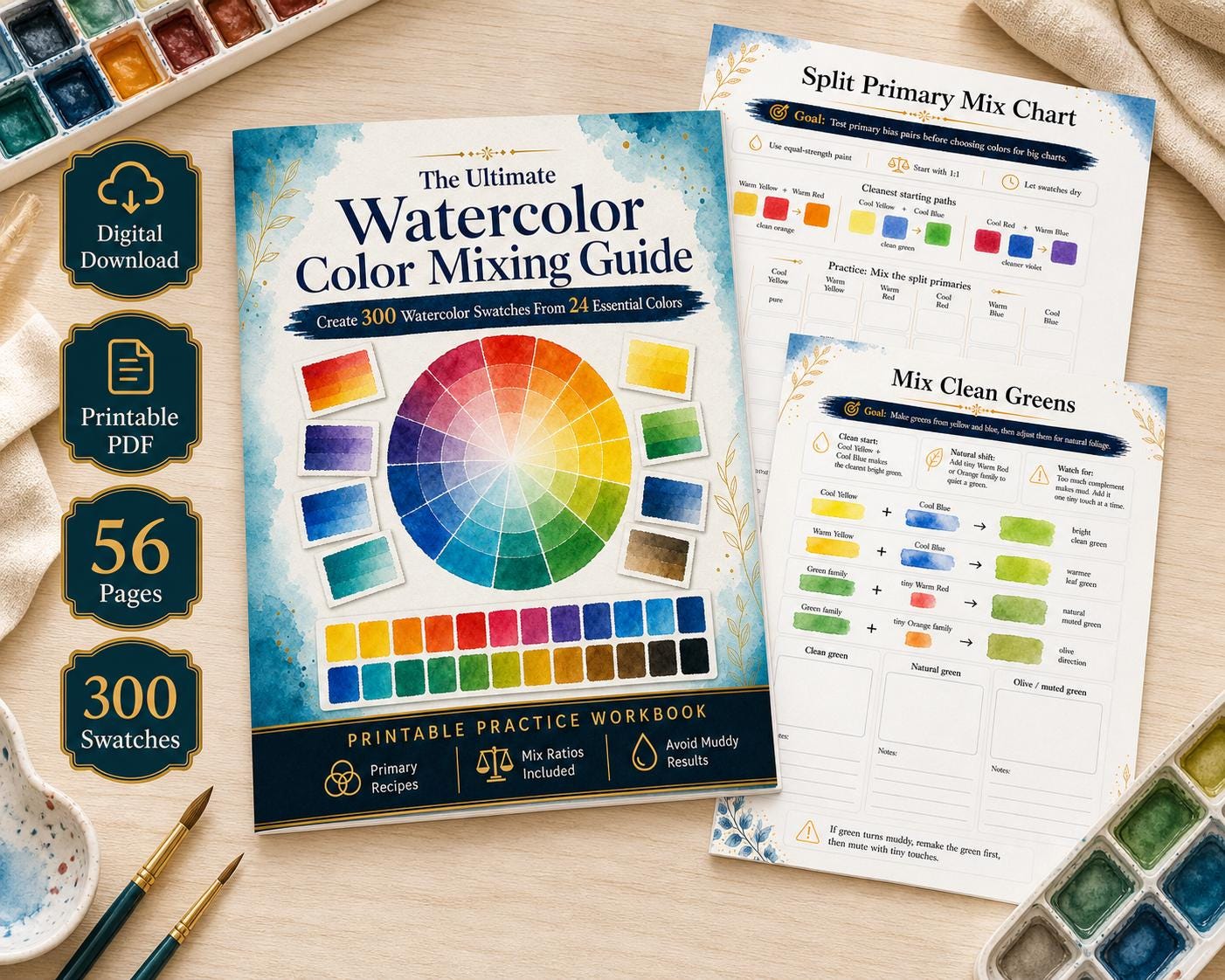
From the InklessEdit print shop
Watercolor Color Mixing
Our Watercolor Color Mixing workbook is relevant once you have chosen paints and want guided swatch and mixing practice. It is a printable digital resource, not a paint set.
56 pages · Printable PDF
View on EtsyDigital download · No physical item shippedChoose for your next month of painting
Picture three actual sessions, including cleanup. Which kit would you be willing to set out each time? Choose that format, keep the purchase modest, and let your experience identify the next useful change.
If you already own usable paints, do not replace them just to follow this comparison. Begin with what you have and make notes about what is inconvenient.
For the other major part of the kit, see how to choose watercolor paper. If you are unsure whether you want transparent washes or more opaque areas, compare watercolor and gouache first.
Words and ideas from InklessEdit. Read our editorial approach.
← Back to the journal