A place to begin
Look for one clear edge, one soft passage, and one place where a small mark changes the whole picture. You do not need art-history vocabulary to begin.
A good way into watercolor is to spend time with actual paintings. This selection pairs five works from The Metropolitan Museum of Art with questions you can use while looking.
This is an editorial selection, not a ranking of the world’s “most famous” paintings. We chose works with different subjects and approaches, and verified their titles, dates, and materials against the museum’s records. The reproduced images are public-domain Open Access images; the looking prompts are our own.
1. J. M. W. Turner — The Lake of Zug, 1843
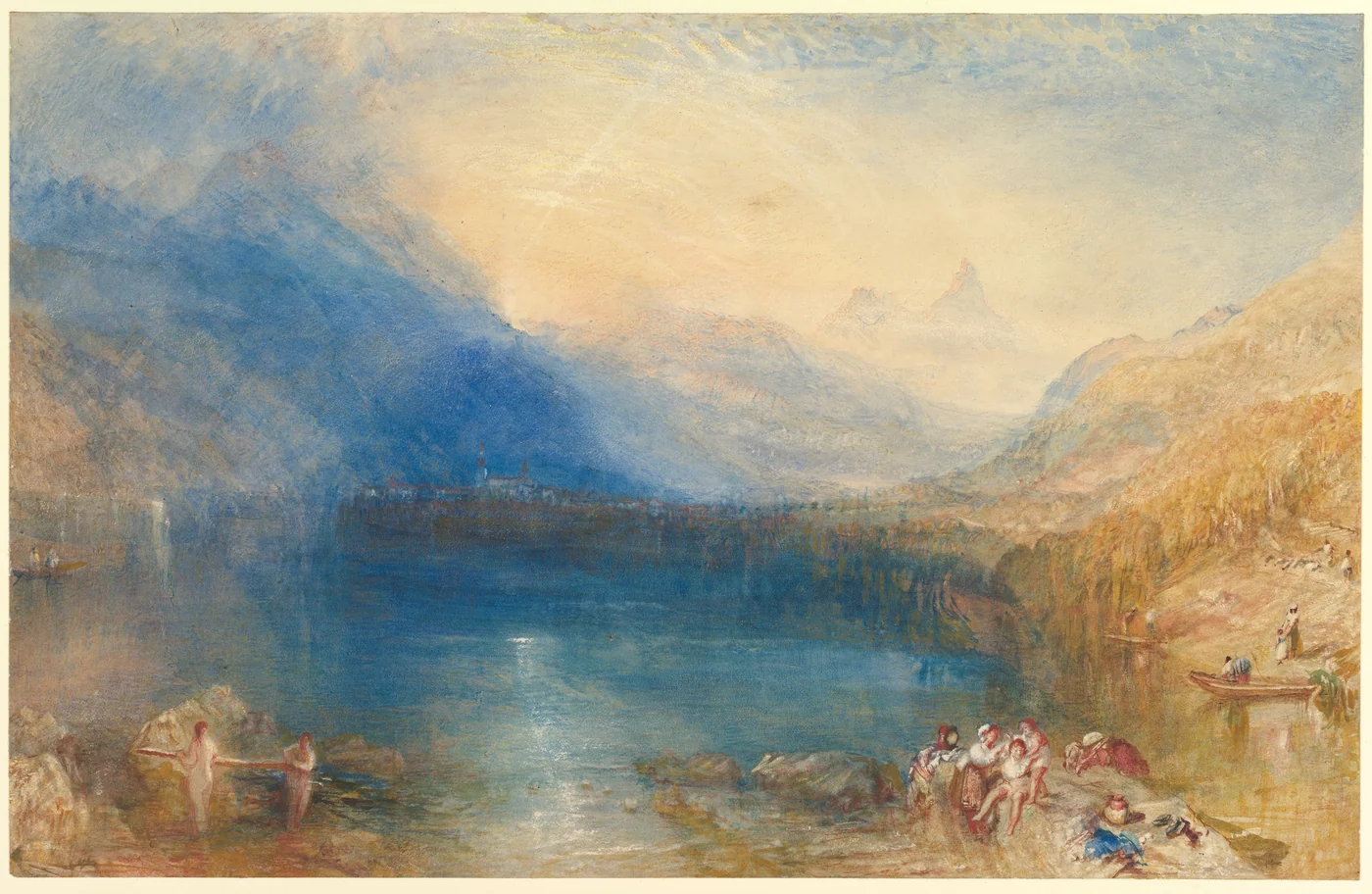
The painting at the top of this article is Turner’s The Lake of Zug. The museum identifies watercolor and gouache with reductive techniques over graphite. That fuller description matters: the image is not simply a wash of blue pigment. Read the collection record.
Start at the blue mountain on the left, then follow the pale sky toward the warmer right edge. Next, look down at the figures. How much of your sense of scale comes from those small human shapes?
Try covering the foreground with your hand while looking at the screen. Does the lake feel larger, emptier, or harder to measure? This is a looking experiment, not an explanation of exactly how Turner built every layer.
The Bermuda garden
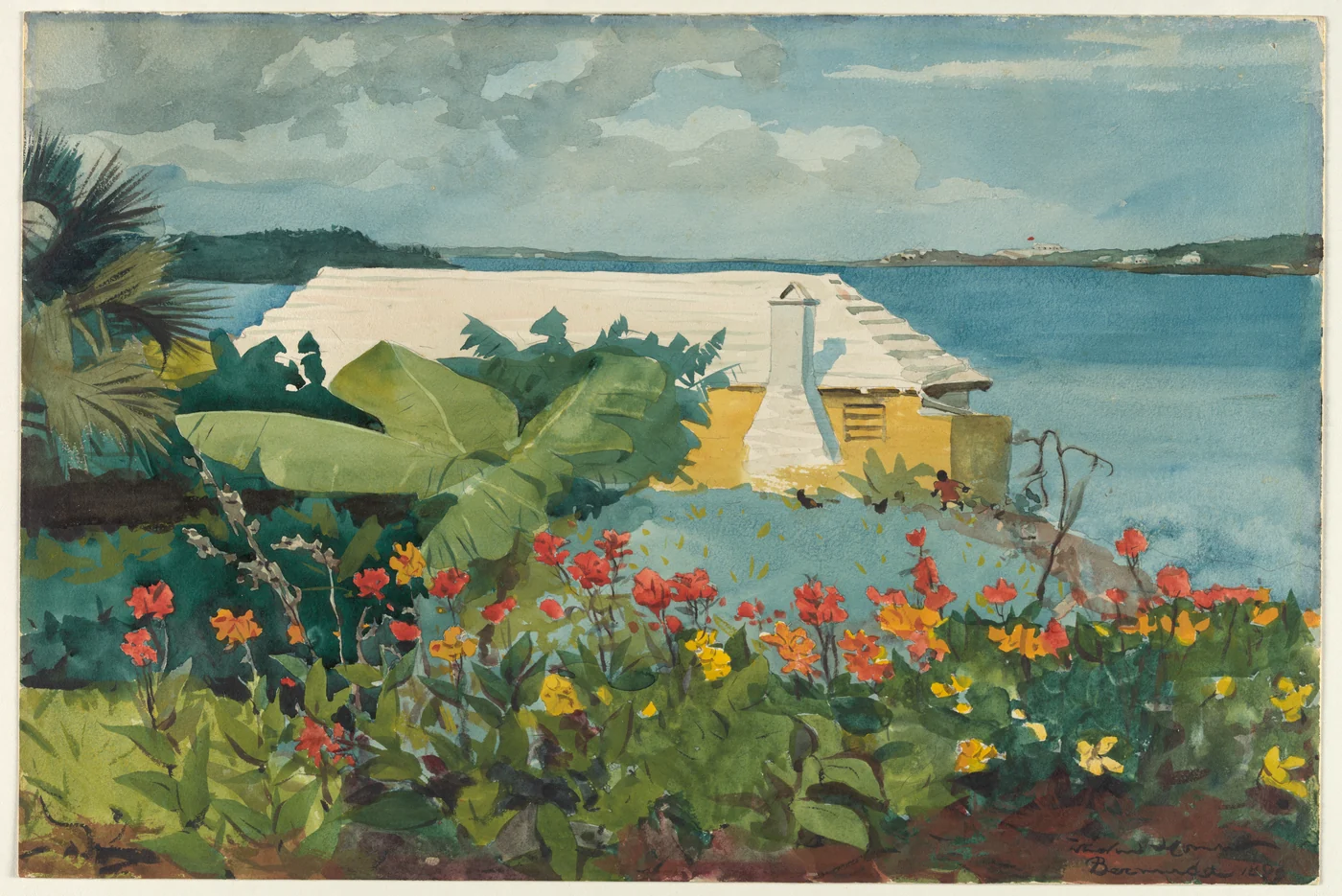
2. Winslow Homer — Flower Garden and Bungalow, Bermuda, 1899
Homer’s picture uses watercolor and graphite on off-white wove paper. Its garden, roof, and water offer a very different color arrangement from Turner’s lake. Read The Met’s record.
First look only at the broad shapes: the pale roof, the blue water, the large green leaves. Then allow yourself to notice the bright flowers. Which do you see first, and which keep pulling your attention back?
A useful comparison is between the long, quiet stretch of water and the busy lower edge. Imagine the entire picture filled with flower-sized marks. The contrast between crowded and quieter areas is one of the things this image lets you examine.
A view over Rouen
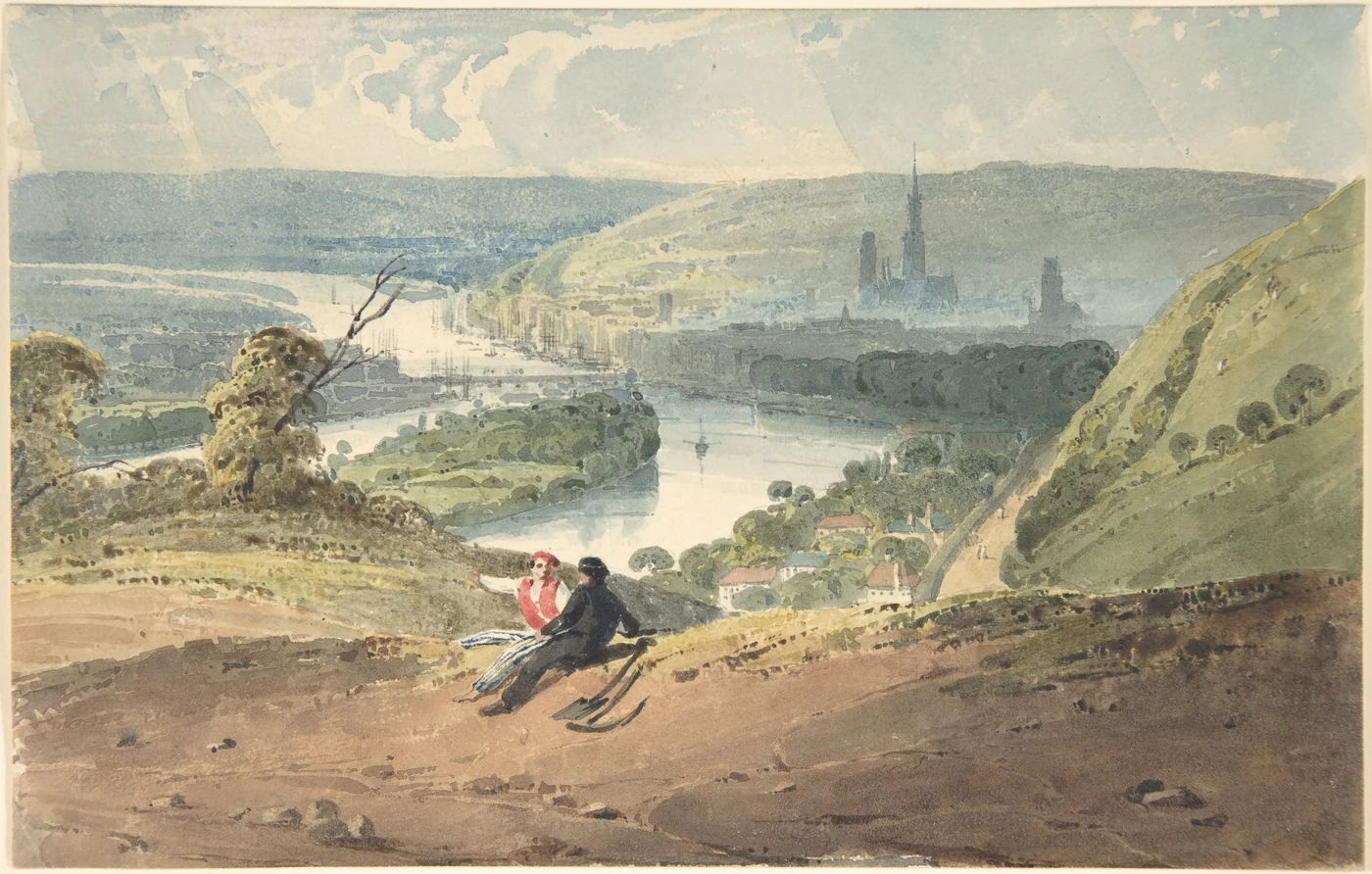
3. Richard Parkes Bonington — Rouen, View from Bon-Secours, 1821–22
The Met records watercolor, pen and brown ink, over graphite. Two people sit on the hillside above the city and river. Read the collection record.
Trace the route your eye takes from the people to the far bank. Do the river’s curves guide you, or do you jump straight to the tall city buildings? There is no required answer; the point is to notice how you enter the scene.
Now compare the hillside nearest you with the distant horizon. Which parts are most clearly separated? Which merge? You can explore the idea of distance by describing those differences in ordinary words without trying to identify every technique.
An entire world in a patch of plants
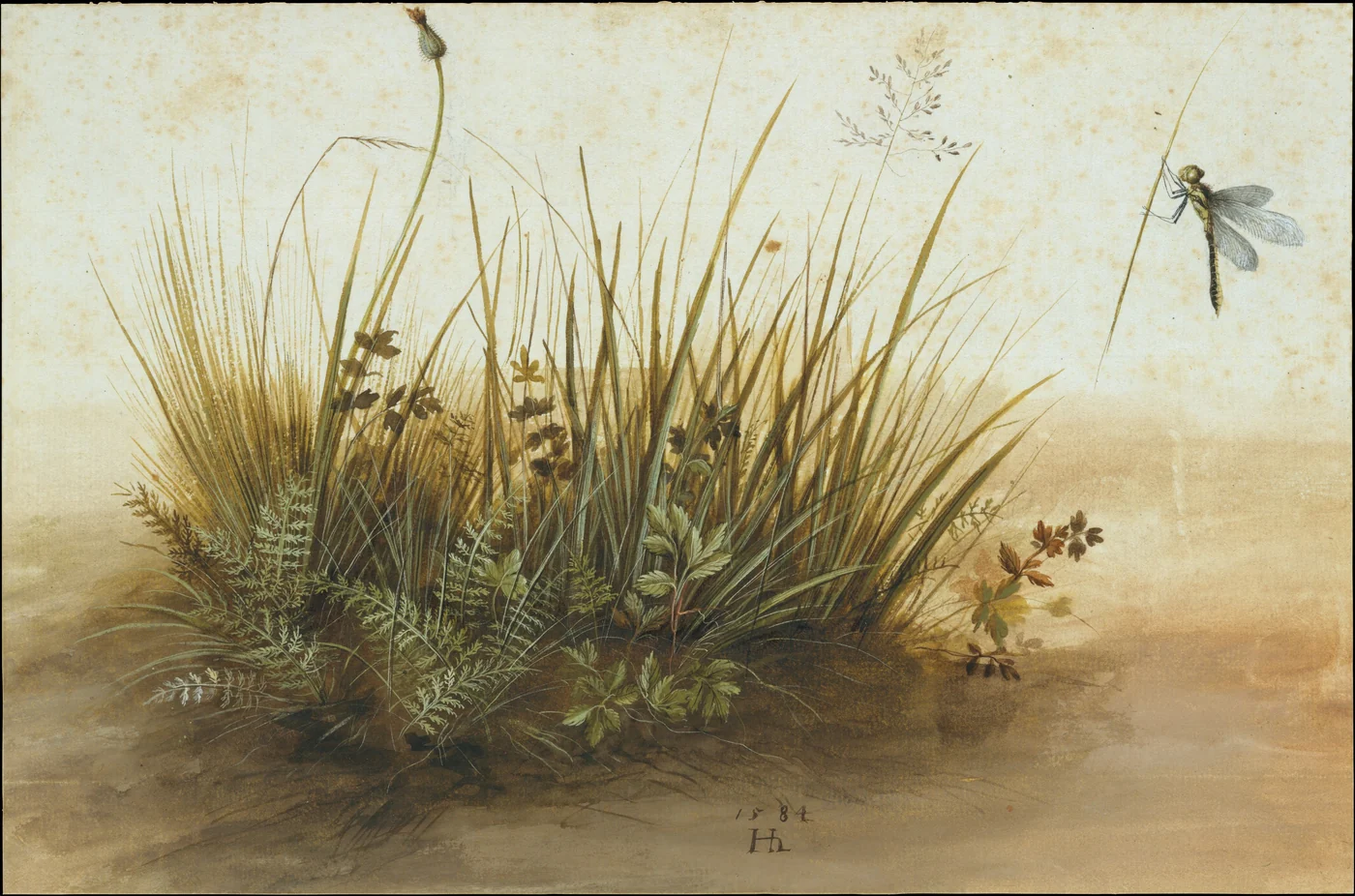
4. Hans Hoffmann — A Small Piece of Turf, 1584
Hoffmann’s work combines gouache and watercolor over charcoal. It is a useful counterpoint to the three broad views above. The Met’s object record.
The narrow stems, broad leaves, and insect invite a slower kind of looking. Choose one stem and follow it upward. Notice how often it crosses another shape and how much empty paper surrounds the cluster.
What would happen if the plants filled the whole sheet? The surrounding space helps make an ordinary small subject feel worth sustained attention. That observation can be useful even if you never intend to paint a botanical study yourself.
Weather crossing the mountains
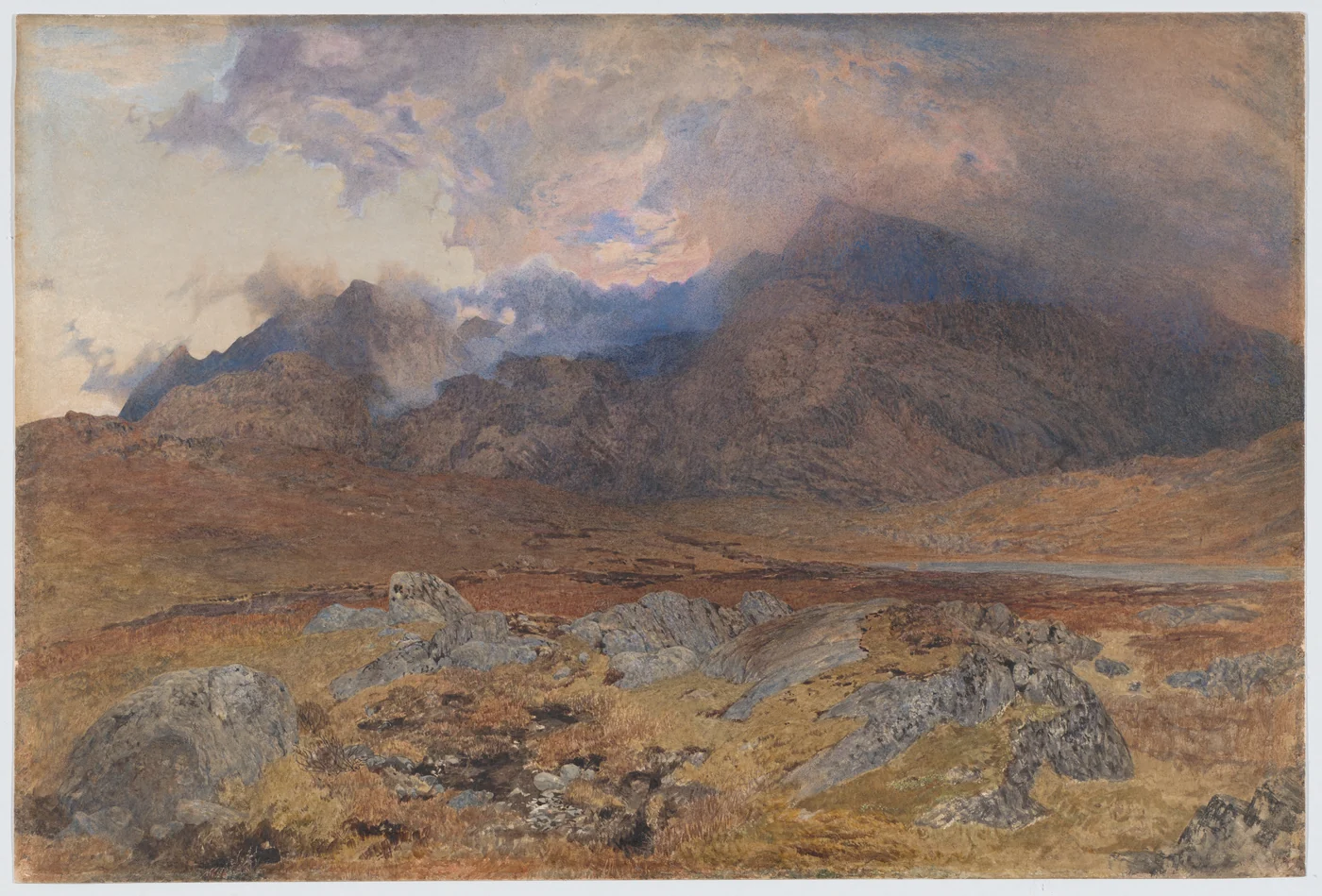
5. Alfred William Hunt — Snowdon, after an April Hailstorm, about 1857
The museum dates this watercolor to about 1857 and also records the title Snowdon through Clearing Clouds. Read the full record.
Look from the sharply described foreground rocks toward the darker mountain and cloud. Which shapes feel solid, and which seem to be passing? The change of weather is something you can explore by comparing boundaries and brightness.
Return to Turner’s lake after spending a moment here. Both contain mountains, yet they do not create the same experience. Describe each in three words of your own. Those words can become a more personal record of the pictures than a list of technical terms.
Turn looking into a small creative habit
Choose a single painting for your next visit, whether online or in a museum. Spend one minute with the whole picture and one minute with a detail. Write one observation and one question; leave yourself permission not to resolve the question immediately.
If you would like context for the changing uses of this medium, read our brief history of watercolor. If you would rather begin a page of your own, our beginner’s guide will help you make a small materials plan.
All five images are reproduced under The Met’s Open Access policy. A digital reproduction cannot fully convey a work’s scale, surface, or appearance under museum lighting.
Words and ideas from InklessEdit. Read our editorial approach.
← Back to the journal